
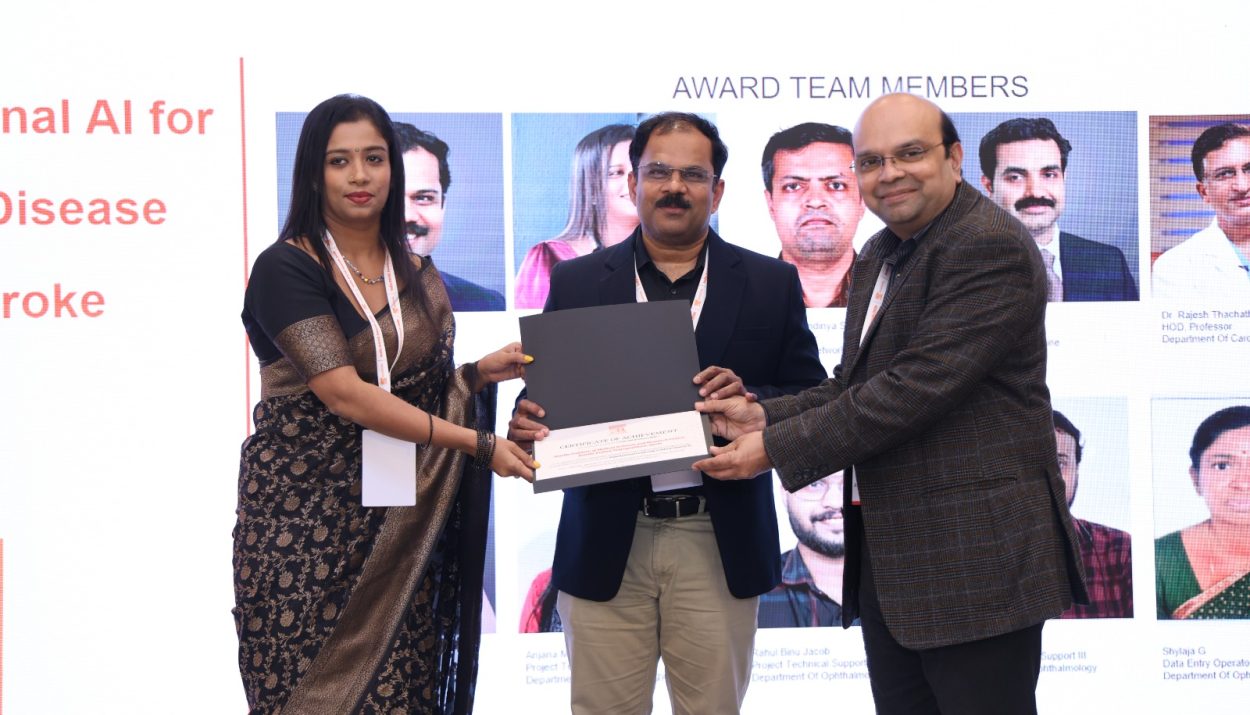

Eyes will now become not just windows to the outside world, but also a window that accurately reveals the health status of the human body. Dr. Gopal S. Pillai, Head of the Department of Ophthalmology at Amrita Hospital, Kochi, has drawn national attention for developing an AI-based technology that can predict heart attacks, strokes, and kidney diseases in advance by examining the retina. In recognition of this groundbreaking achievement, he has been awarded the prestigious Elsevier RAISE (Research in AI for Social Empowerment) Award, which honors excellence in healthcare innovation.
The retina is the only part of the human body where blood vessels and nerves can be directly observed without any surgical intervention. Leveraging this unique feature and integrating it with artificial intelligence, Dr. Gopal S. Pillai and his team developed a technology called “Reti AI.” By performing a detailed analysis of retinal images, this system can accurately predict an individual’s risk of developing heart disease, kidney disease, or stroke. Among numerous entries from across the country, this project secured first place in the “Ethical Clinical AI” category.
Doctors from Amrita Hospital, Kochi—Dr. Rajesh T., Dr. Vivek Nambiar, Dr. Merin Dixon, Dr. Nagesh Subbanna, Dr. Aishwarya E. A., Rahul, and Anjana—were also key members of the project team.
This technology has been developed entirely in India. It enables the identification of potential health risks even before symptoms appear, helping individuals seek timely treatment and avoid serious medical complications. More than just a technological innovation, the system was recognized for upholding high ethical standards, which played a key role in earning the award.
This discovery stands as an excellent example of how artificial intelligence can be used safely and ethically in the healthcare sector for the greater good of humanity.