
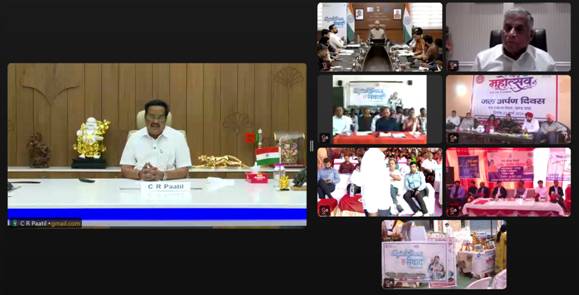

The Department of Drinking Water and Sanitation (DDWS), Ministry of Jal Shakti, today released the Operational Guidelines of Jal Jeevan Mission (JJM) 2.0 as Jal Mahotsav 2026 culminated alongside the Sujal Gram Samvad on the occasion of World Water Day. Jal Mahotsav 2026 was observed as a 15‑day nationwide campaign from 8 March, International Women’s Day, to 22 March, World Water Day, marked by widespread community participation and Jal Arpan of drinking water assets to Gram Panchayats across the country.
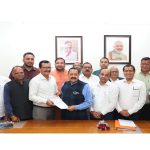
The culmination event was honoured by the presence of the Union Minister for Jal Shakti, Shri C.R. Patil, and the Minister of State for Jal Shakti, Shri V. Somanna, who joined virtually, along with senior officials of the Department. On the occasion, a video on Jal Mahotsav 2026 was released, showcasing key activities and messages delivered by eminent leaders during the campaign. The e‑release of the JJM 2.0 Operational Guidelines by the Union Minister marked a significant milestone following the Cabinet approval for the extension of Jal Jeevan Mission till December 2028, with a renewed focus on structural reforms and long‑term sustainability of rural drinking water systems.
Addressing the gathering, the Union Minister said, Jal Jeevan Mission is not merely a scheme to provide tap connections, but a mission that has transformed lives, particularly of women and children in rural India, by ensuring dignity, health and ease of living. While the first phase of Jal Jeevan Mission achieved rapid expansion of infrastructure, experience on the ground has clearly shown that sustainability, functionality and service delivery must now be the central focus. It is with this objective that the Government has approved Jal Jeevan Mission 2.0, extending the Mission till December 2028 with a renewed emphasis on structural reforms and accountability, ensuring that rural households receive regular, adequate and safe drinking water on a long‑term basis.
Union Minister Shri Patil further said that, the Prime Minister has advised that initiatives such as Jal Utsav and Nadi Utsav should be observed across the country to strengthen Jal Sanchay se Jan Bhagidari, so that water conservation and water management become a people‑led movement rather than a government‑driven exercise alone. He said that Jal Mahotsav 2026, celebrated from 8 March to 22 March, has effectively translated this vision into action, with widespread community participation, awareness activities and collective efforts towards water conservation and sustainable water management being witnessed across rural India.
He stated that it is in this larger context of strengthening community ownership, accountability and long‑term sustainability that the government has approved Jal Jeevan Mission 2.0, extending the Mission till December 2028 with a renewed emphasis on structural reforms and governance improvements. The Union Minister underlined that JJM 2.0 is aimed at ensuring that rural households receive regular, adequate and safe drinking water on a long‑term basis, moving decisively from an infrastructure‑creation approach to a service‑delivery‑oriented model.
Speaking on the Reform‑Linked Memoranda of Understanding (MoUs), the Union Minister informed that MoUs are being signed with States to ensure effective implementation of the structural reforms envisaged under Jal Jeevan Mission 2.0 and said that, so far, nine States have signed MoUs during Jal Mahotsav 2026, reaffirming their commitment to deliver sustainable drinking water services at the village level. He further stressed that States, districts and Gram Panchayats must now work in close coordination to translate these reforms into tangible outcomes on the ground.
Speaking on the occasion, the Minister of State for Jal Shakti, Shri V. Somanna, said that Jal Mahotsav 2026, celebrated from 8 March to 22 March, evolved into a nationwide Jan Bhagidari movement, witnessing community meetings, awareness drives, school engagements and Jal Arpan of assets to Gram Panchayats across the country. He emphasised that water conservation and drinking water service delivery cannot be limited to a campaign period but must become a daily collective responsibility of all stakeholders.
Referring to the leadership of the Prime Minister, Shri Somanna said that ensuring safe drinking water has become a national priority, and Jal Mahotsav 2026 has further strengthened community participation across the country. He also highlighted the approval of Jal Jeevan Mission 2.0, with its focus on structural reforms, improved governance and long‑term sustainability of rural drinking water systems, supported by Reform‑Linked MoUs reflecting strong Centre‑State commitment for effective implementation.
The Minister of State, Shri Somanna further underscored the importance of water quality, sustainability and community ownership, and highlighted Sujal Gram Samvad as a key initiative for strengthening village‑level water management. Calling for collective responsibility towards water conservation and efficient water use, he reiterated that Jal Jeevan Mission is a people’s movement aimed at achieving Har Ghar Jal and contributing to the vision of Viksit Bharat @2047.”
In his opening remarks, Secretary, DDWS, Shri Ashok K.K. Meena, highlighted that during Jal Mahotsav, extensive activities such as large-scale cleaning of water sources and tanks, and water quality testing through field test kits were undertaken, creating widespread awareness on water safety and management. He noted that the scale of participation by communities and Panchayats reflects the growing momentum towards making water management a people’s movement.
He further stated that the JJM 2.0 Operational Guidelines, provides a clear and comprehensive roadmap for strengthening governance of rural drinking water services.
Key reform areas highlighted under JJM 2.0 include:
Assured service delivery with defined performance standards
Clear accountability at State, district and Gram Panchayat levels
Long‑term sustainability through source protection, water conservation and community ownership
The Guidelines also reinforce that without source sustainability, water services cannot be reliable, and therefore call for convergence on water conservation, rainwater harvesting, grey water management and aquifer recharge.
Sujal Gram Samvad brings Voices from Villages to the National platform
An important highlight of the day was the 5th Sujal Gram Samvad, where representatives from villages across five-Gram Panchayats of five States shared their first‑hand experiences of managing drinking water services. The interaction demonstrated that JJM 2.0 reforms are not policy‑level abstractions, but are already shaping village‑level governance, with communities taking ownership of water systems.
Uttarakhand: Villag-Hatnur, GP-Hatnood, District- Pauri Garhwal
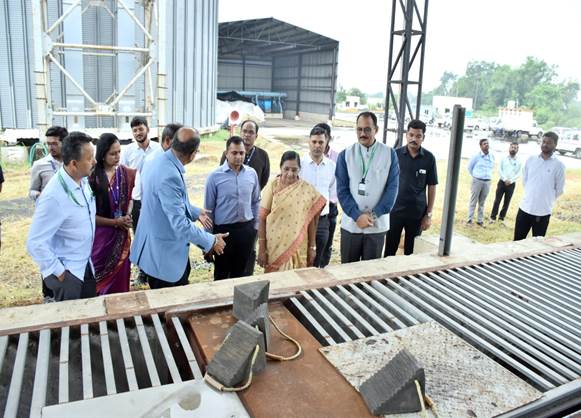
The Samvad began with an interaction from Village Hatnur, GP Hatnood, Uttarakhand, where Shri Pradeep Singh, Director, NJJM, DDWS, engaged with the Sarpanch, AWW, school students, pump operator and other community representatives. The Sarpanch highlighted the successful implementation of 24×7 gravity-based water supply system ensuring regular water availability. Anganwadi Worker informed that water quality is regularly tested using field test kits and periodic cleaning is undertaken.
The pump operator shared that despite heavy rainfall and system challenges, the village O&M team promptly restored the supply. Community members highlighted that operation and maintenance is managed through local contributions, ensuring smooth functioning. School students shared that tap water has improved hygiene and allowed them to focus on studies.
Haryana: Village & GP-Tepla, District – Ambala
Ms. Ankita Chakraborty, Deputy Secretary, NJJM, DDWS interacted with VWSC members, Sarpanch and villagers of Tepla, Ambala, Haryana. Community members shared regular water quality testing using field test kits and highlighted that ₹40 per household per month as user charges are collected for operation and maintenance. Issues like leakages, pump servicing addressed promptly.
During the interaction, the Minister of Jal Shakti also engaged with Sarpanch and enquired about water availability, quality, household coverage and sustainability of the system. In response, it was informed that all households are connected through a tube well based system, water is safe, regular chlorination is carried out, and community contributions in support maintenance.
District Magistrate Shri Ajay Singh Tomer stated that universal tap water coverage has been achieved, with strong monitoring mechanisms in place. He highlighted the active role of VWSCs and emphasised that regular testing, chlorination and timely maintenance are ensuring reliable and sustainable water supply.
Chhattisgarh: Village-Salhebhat, GP – Salhebhat, District – Kondagaon
From Chhattisgarh, Shri Umesh Bhardwaj, Deputy Secretary, NJJM, DDWS, was present on the ground and interacted with the Sarpanch and community members. Sarpanch and community shared that functional tap water connections have been provided to all households, schools, AWCs with active participation of women representatives and village institutions. Community members highlighted that user charges of ₹50 per household per month are being collected to support operation and maintenance, and trained local operators ensure timely repairs and smooth functioning of the system. They also shared that improved water access has reduced hardship and encouraged responsible usage of water at the household level.
District Magistrate Smt. Nupur Rashi Panna highlighted that despite challenging terrain and connectivity issues, steady progress is being made across villages. She informed that a significant number of schemes have been certified, while work is ongoing in remaining areas. She emphasised the importance of strengthening technology-based monitoring, ensuring transparency and promoting community participation to sustain the gains of the mission.
Odisha: Village- Bhanagan, GP- Chandol, District- Kendrapara
For Odisha, Shri Ananjay Tiwari was present in person at Bhanagan village, Chandol GP, Kendrapara district and facilitated the interaction with Panchayat, district administration and community members. Secretary, DDWS, Shri Ashok K. K. Meena initiated the interaction with the Sarpanch and villagers in Odia, enabling better understanding of ground realities. The Sarpanch shared that regular review meetings of VWSCs are conducted and ₹50 per household per month as user charges have been passed in Gram Sabha. He stated that improved water access has led to better health outcomes.
Community members, including students, especially girls, highlighted that reliable water supply has reduced the burden of fetching water and improved hygiene and school attendance. They are now confident that they can pursue their hobby, study and lead a better life.
The District Magistrate Shri Raghuram R. Iyer further informed that regular monitoring mechanisms are in place, with close coordination between departments, and emphasised continued focus on service delivery, water quality and strengthening local institutions to ensure sustainability of rural water supply systems.
Madhya Pradesh- Village & GP – Hardot, District- Raisen
Shri Sumit Priyadarshi, Deputy Adviser, NJJM, DDWS, interacted virtually with community members and officials. It was informed that significant progress has been made under the Jal Jeevan Mission with large-scale household tap water connections. The MLA who was present there for Jal Arpan also highlighted improved access to safe drinking water through tap connections at houses has led to ease of living of women.
Sarpanch shared that user charges of ₹100 per household are being collected for operation and maintenance, while beneficiaries said that water quality testing is being done by FTK trained women.
District Magistrate Shri Arun Kumar Vishwakarma informed that regular monitoring through VWSC meetings, along with water conservation and recharge measures, is ensuring sustained drinking water supply in the area, with the remaining household connections being completed on priority. He reiterated that Jal Mahotsav has strengthened Jal Sanchay as Jan Andolan.
Shri Kamal Kishore Soan, Additional Secretary and Mission Director, NJJM, DDWS, welcomed the dignitaries by extending greetings on World Water Day and highlighted that Sujal Gram Samvad under Jal Mahotsav 2026 reflects strong convergence from national to grassroots levels, and that the release of guidelines under Jal Jeevan Mission 2.0 is a key step towards ensuring effective implementation and sustained delivery of safe drinking water.
As Jal Mahotsav 2026 concluded on World Water Day, the Ministry called upon all stakeholders to carry forward the spirit of ‘Jal Sanchay se Jan Bhagidari’, ensuring that every village becomes a Sujal Gram, contributing to the vision of Har Ghar Jal and Viksit Bharat @2047.