

Dr. T. V. Somnathan, Cabinet Secretary, Government of India, addressed senior officials during Karmayogi Sadhana Saptah and said that building a strong learning culture within government institutions depends fundamentally on leadership. He said that when senior officers engage seriously with learning and lead by example, it shapes the behaviour of the entire organisation. Describing Mission Karmayogi as a national initiative, he said its real impact will be seen when it reaches districts and grassroots levels where citizens directly experience governance. He emphasised that frontline officials must be equipped with the skills, motivation and competencies required to deliver effectively.
Emphasising the importance of continuous learning, Cabinet Secretary said that while career progression in civil services may appear to follow a natural upward path driven by seniority, reaching positions of real responsibility depends increasingly on competence and the ability to deliver. Drawing an analogy, he remarked that while “seniority may act like a force that moves careers upward, it is capability that determines how far one truly rises.” He added that in a rapidly changing world, where knowledge and skills depreciate quickly, continuous learning is essential both for improving governance outcomes and for enabling individuals to realise their full professional potential.
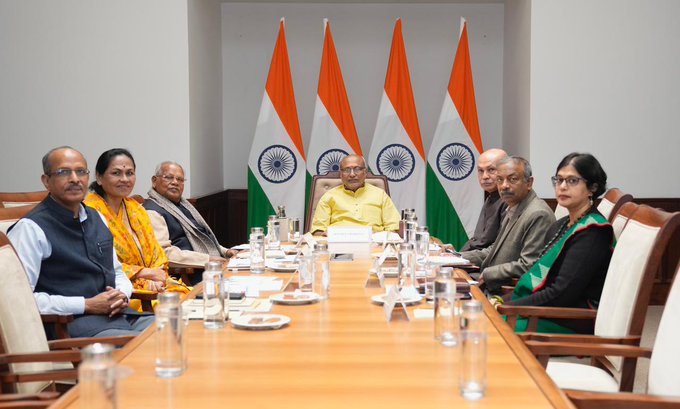
The address was delivered during a special session of Karmayogi Sadhana Saptah held at the Dr. Ambedkar International Centre, New Delhi, with participation from senior officers of the Government of India. The session formed part of the post-lunch programme following thematic discussions on training institutions and quality frameworks, where the Cabinet Secretary shared his perspectives on strengthening capacity building across governance systems.
Earlier in the day, Dr. V. Anantha Nageswaran, Chief Economic Advisor, Government of India, delivered a masterclass on building an adaptive and entrepreneurial state through capacity building. He highlighted the role of Artificial Intelligence in governance and emphasised that in an era where change occurs rapidly, governments must develop the capability to learn, adapt and respond effectively. He noted that perfection should not come at the cost of timeliness, and that learning-oriented governance systems are essential for navigating complexity and uncertainty.
The day also featured two major thematic sessions. The National Conclave of Civil Services Training Institutions brought together over 600 representatives from Central and State Training Institutions, PSUs and Ministries to discuss actionable recommendations developed by four Taskforces. These covered areas including collaborative capacity building, institutional leadership, AI-enabled training quality enhancement and sustainable funding mechanisms, based on consultations with over 150 officials and engagement with 62 training institutions across sectors.
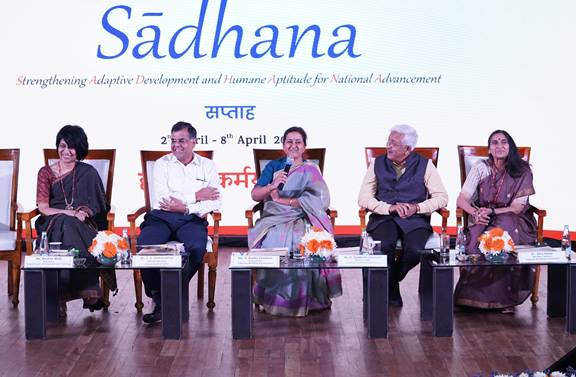
A session on the Karmayogi Quality Framework showcased an evolved approach to ensuring that learning on the iGOT platform translates into improved decision-making and service delivery. The framework, developed through a multi-disciplinary consultative process involving experts from industry, academia and government, provides a unified lifecycle approach to quality across the stages of Discover, Design, Develop, Deliver, Evaluate and Improve. A panel discussion featuring Task Force members highlighted the importance of grounding learning in real-world administrative contexts, and members were felicitated for their contributions.
Dr. Somnathan called upon State Governments to actively adopt and expand Mission Karmayogi, stating that it is not merely a Central Government initiative but a national effort that requires ownership at all levels. He said that States must take the lead in integrating capacity building into their governance systems, particularly at district and sub-district levels. He added that institutions such as the Department of Personnel and Training, Capacity Building Commission and Karmayogi Bharat are supporting this expansion through shared frameworks, digital platforms, and initiatives which can be adapted to local needs and contexts.
He further said that the pace of change in governance and knowledge systems has increased significantly, making it difficult to remain effective without continuous upskilling. He noted that earlier it was possible to stay updated through limited sources, but today structured and sustained learning is necessary. He added that future governance systems are likely to place greater emphasis on performance and capability, making continuous capacity building not just a requirement for public service but also an investment in one’s own professional growth.
Karmayogi Sadhana Saptah, being organised from April 2 to April 8, 2026, is a nationwide initiative under Mission Karmayogi aimed at strengthening continuous learning across civil services. The programme focuses on key themes including Technology, Tradition and Tangible Outcomes, and brings together Ministries, States and Civil Services Training Institutions to build a future-ready, citizen-centric governance ecosystem. The initiative follows the inauguration held earlier in the day, marking five years of Mission Karmayogi and the launch of several new capacity building initiatives.