

Children face significantly higher cumulative non-carcinogenic risk than adults when exposed to trace metal contamination in river systems, according to a new study carried out with water samples from the Betwa–Yamuna confluence in Bundelkhand in Uttar Pradesh.
Traditionally, scientists test water, calculate an average contamination level, and compare it to safety limits. However, this system of investigation has its limitations as the risk can vary with the level of exposure to the risk and the people who are affected.
An earlier study last year had demonstrated that surficial sediments of the Ganga plain act as major sinks of contamination and secondary sources of toxic metals, with clear spatial variability linked to anthropogenic inputs and geomorphic controls.
It showed strong coupling between sediment geochemistry and riverine metal transport, emphasizing that contaminants stored in sediments can be remobilized into the water column under changing hydrological conditions, thereby posing risks to aquatic systems and human populations.
Building on these findings, and recognizing that rivers in the Ganga Plain are extensively used for domestic and agricultural purposes despite increasing pollution pressures, the scientists from Birbal Sahni Institute of Palaeosciences (BSIP), Lucknow, an autonomous institution of the Department of Science and Technology (DST), extended the investigation beyond sediment contamination alone to evaluate the direct implications for water quality and human health.
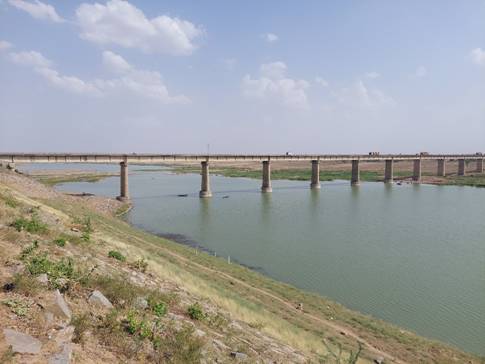
Fig 1: Location of Betwa river water sampling in Hamirpur, UP
They focused on assessing dissolved metal concentrations and associated human health risks in river waters.
Surface water samples were collected periodically from strategically selected locations in the Betwa–Yamuna confluence to capture spatial and seasonal variability, followed by standardized laboratory measurements of physicochemical parameters and trace metal concentrations.
Subsequently, quantitative risk assessment models were applied to estimate exposure levels and evaluate potential non-carcinogenic and carcinogenic risks using internationally accepted frameworks.
Using a technique called Monte Carlo simulation, the researchers ran 10,000 virtual scenarios or simulations of human exposure to metals like arsenic, lead, and cadmium. Each simulation tweaked variables like how much water people drink, their body weight, seasonal changes in pollution covering range of possibilities, enabling probabilistic characterization of risk distributions and threshold exceedance probabilities.
This ensured robust data generation, reliable interpretation, and scientifically sound conclusions, thereby contributing to improved environmental monitoring, risk assessment.
The study published in Nature scientific Reports showed that children face significantly higher cumulative non-carcinogenic risk, with hazard index (HI, a measurement of probability of hazards), exceeding safety thresholds in approximately 67% of simulated scenarios, and that arsenic exposure poses a substantial carcinogenic risk under realistic exposure variability.
Fig 2: Study area maps: (a) India with an inset of the Ganga plains; (b) Digital Elevation Model (DEM) of the Ganga plain highlighting the study area (c) Sampling locations along the Betwa and Yamuna rivers, both upstream and downstream of their confluence, in Hamirpur District, Uttar Pradesh, India.
This integrated, uncertainty-aware approach establishes a new method for river health assessment in developing regions and delivers a robust scientific foundation for targeted mitigation, exposure management, and evidence-based water safety policy.
These results point to a combination of natural and anthropogenic (Human-related) inputs like – agricultural runoff, untreated effluents and industrial discharges, thermal power generation, urban sewage. Besides, it highlights chronic pollution risks that, if untreated, could compromise drinking water safety. The amplified contaminant levels and health risks at the confluence are consistent with cumulative upstream loading and hydraulic mixing of two chemically contrasting river systems, which increases both metal mobilization and exposure potential. The study indicates the need for priority control of heavy metals at the Betwa–Yamuna confluence and can help develop effective mitigation and management strategies.