

Villages such as Murugummi, Marella, and Thangella in Prakasam district of Andhra Pradesh have emerged as models of water resilience through community-led rainwater conservation initiatives implemented under the Jal Sanchay Jan Bhagidari campaign of the Ministry of Jal Shakti, Government of India. The initiative has significantly improved groundwater availability, strengthened livelihoods, and reduced distress migration in the region.
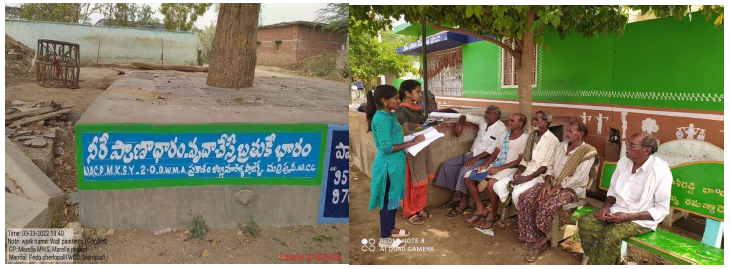
Earlier, these villages faced acute water scarcity due to erratic rainfall, declining groundwater levels, and frequent borewell failures, adversely affecting agriculture and livelihoods. The situation began to change with active community mobilisation through Gram Sabhas, door-to-door awareness campaigns, Kalajathas, workshops, and field demonstrations. Farmers, women, youth, and local institutions collectively adopted practices such as water budgeting, crop planning, and groundwater sharing, fostering a strong sense of ownership.
Adopting a ridge-to-valley approach, the villages implemented a range of rainwater harvesting and conservation measures to capture, store, and recharge rainwater. Key interventions include percolation tanks, farm ponds, staggered trenches, rooftop rainwater harvesting systems, and the rejuvenation of community ponds.
Key Achievements
Murugummi: Construction of 71 water conservation structures with a cumulative storage capacity of approximately 8.11 lakh cubic metres, providing protective irrigation to 264.5 hectares of agricultural land.
Marella: Development of 53 water conservation structures with a cumulative storage capacity of about 10.04 lakh cubic metres, enhancing agricultural sustainability across 220.5 hectares. Additionally, the renovation of community ponds and tanks contributed nearly 5.95 lakh cubic metres of additional storage capacity.
Thangella: Construction of 71 water conservation structures with a cumulative storage capacity of around 5.89 lakh cubic metres, providing irrigation support to 185.3 hectares. The revival of traditional water bodies further augmented storage capacity by approximately 3.98 lakh cubic metres.
Impact
Improved Groundwater Levels: Benefiting approximately 5,900 people by enhancing access to water for domestic and agricultural purposes.
Enhanced Agricultural Productivity: Expansion of protective irrigation has strengthened livelihoods for a majority of farming households.
Increase in Milk Production: Improved water availability has supported dairy activities, providing supplementary income to rural families.
Restoration of Soil Moisture: Enhanced land health has enabled more stable and resilient cropping patterns.
Reduction in Distress Migration: Improved livelihood opportunities have enabled families to sustain themselves locally.
Recognition
Murugummi village was conferred the Second-Best Village Panchayat Award at the 6th National Water Awards, 2024, while Marella was selected among the top 30 villages and Thangella was nominated for national recognition, underscoring the effectiveness of community-led water conservation efforts.
Conclusion
The transformation of these villages demonstrates the effectiveness of the Jal Sanchay Jan Bhagidari approach in fostering community ownership of water resources. The initiative highlights a replicable model for sustainable water management and reinforces the importance of people’s participation in achieving long-term water security.