

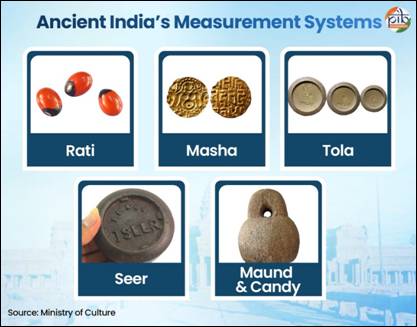

Measurement forms the foundation of modern economic systems, industrial production, scientific advancement, and consumer protection. Standardized measurements ensure transparency and public trust across sectors such as trade, healthcare, infrastructure, telecommunications, energy distribution, and digital technologies. In this context, metrology, the science of measurement, and legal metrology, the regulation of measurements, ensure fairness in trade and commerce. Metrology establishes common standards for units and measuring instruments. These standardized units are established for various kinds of measurements used in the trade of commodities, like length, weight, volume, time, temperature, and other physical quantities. It has a wide range of applications, including in navigation, construction, product development, environmental monitoring, medicine, and food processing.
Metrology focuses on the science and accuracy of measurement. Legal metrology meanwhile focuses on ensuring accuracy and reliability in weights and measurements for public protection and fair trade. India has developed a comprehensive legal metrology framework through progressive legislative reforms, institutional strengthening, and digital governance initiatives. From ancient systems of weights and measures to the enactment of the Legal Metrology Act, 2009, India’s measurement ecosystem is continuously evolving. The evolving framework seeks to address changing trade practices, emerging technologies, and growing consumer protection requirements.