

The Union Minister for Environment, Forest and Climate Change, Shri Bhupender Yadav, along with the Chief Minister of Delhi, Smt. Rekha Gupta, today inaugurated eighteen ‘Namo Oxygen Parks’ across Delhi and launched a series of environmental initiatives under the nationwide campaign ‘Ek Ped Maa Ke Naam’ on the occasion of World Environment Day 2026. The event, held at Namo Oxygen Park, Maidangarhi, marked a significant step towards strengthening urban greening, improving air quality and promoting community-led environmental stewardship in the National Capital Territory.
Other dignitaries gracing the occasion included Union Minister of State (EFCC), Shri Kirti Vardhan Singh; Minister for Environment, Forest and Wildlife (NCT Delhi), Sardar Manjinder Singh Sirsa; and other senior officials from Union Ministry of Environment, Forest and Climate Change, Delhi Government, among others.
Addressing the gathering, Shri Bhupender Yadav said that humanity today faces three major environmental challenges — climate change, biodiversity loss and land degradation leading to desertification. He noted that under the leadership of Prime Minister Shri Narendra Modi, India has emerged as a global leader in environmental action, achieving major milestones including becoming one of the world’s leading nations in solar capacity addition, implementing the PM Surya Ghar Yojana, establishing the International Solar Alliance, launching the International Big Cat Alliance (IBCA), expanding Ramsar Wetland sites and achieving several Nationally Determined Contribution (NDC) targets ahead of schedule under the UN Framework Convention on Climate Change.
The Minister emphasized that environmental conservation requires collective action and active public participation. Referring to the Prime Minister’s vision of ‘Ek Ped Maa Ke Naam’, he said the campaign has transformed tree plantation into a people’s movement rooted in gratitude, responsibility and environmental consciousness. He urged citizens not only to plant trees but also to nurture and protect them for future generations.
Highlighting efforts to improve Delhi’s environment, Shri Yadav stated that the Delhi Government, in coordination with the Commission for Air Quality Management (CAQM), is taking active measures to address major sources of air pollution including road dust, vehicular emissions and industrial pollution. These measures include installation of Online Continuous Emission Monitoring Systems (OCEMS), deployment of Air Pollution Control Devices (APCDs), mechanized deep cleaning of roads and accelerated transition towards electric mobility.
The Minister noted that urban greening initiatives are being undertaken across the country through the development of Namo Vans and similar ecological assets. In this direction, eighteen Namo Oxygen Parks have been developed and inaugurated in Delhi to serve as urban green lungs that improve air quality, enhance biodiversity and provide recreational spaces for citizens. He underlined that community participation would be crucial for the long-term success of these initiatives. Shri Yadav further stressed the need for integrated conservation of woodlands, wetlands and grasslands to ensure holistic ecosystem protection and ecological resilience.
The event also witnessed the release of three important environmental publications prepared by the Government of NCT of Delhi:
Working Plan Document for the National Capital Territory of Delhi (2026–27 to 2036–37): A ten-year framework document outlining strategies and targets for environmental governance, conservation, and sustainable development in Delhi.
Management Plan for Asola Bhatti Wildlife Sanctuary (2024–25 to 2034–35): A comprehensive management blueprint for one of Delhi’s most critical biodiversity reserves, providing a roadmap for its protection, restoration, and sustainable management over the next decade.
Delhi Bird Atlas: A landmark compilation of data on Delhi’s avifauna, produced through an extensive citizen science effort involving birdwatchers, naturalists, and volunteers across the city.
Shri Bhupender Yadav noted that these scientific planning documents would significantly strengthen environmental governance in the capital by supporting informed management of urban ecosystems, biodiversity conservation, wetland protection and sustainable development amid a rapidly expanding urban population.
Speaking on the occasion, Chief Minister (NCT Delhi), Smt. Rekha Gupta said that increasing green cover is among the most important measures for improving Delhi’s air quality. She announced that the Delhi Government has set a target of planting 15 lakh trees across the city during the current year. Emphasizing the role of citizens in environmental protection, she stated that community participation is essential not only for plantation drives but also for nurturing and safeguarding the trees after planting.
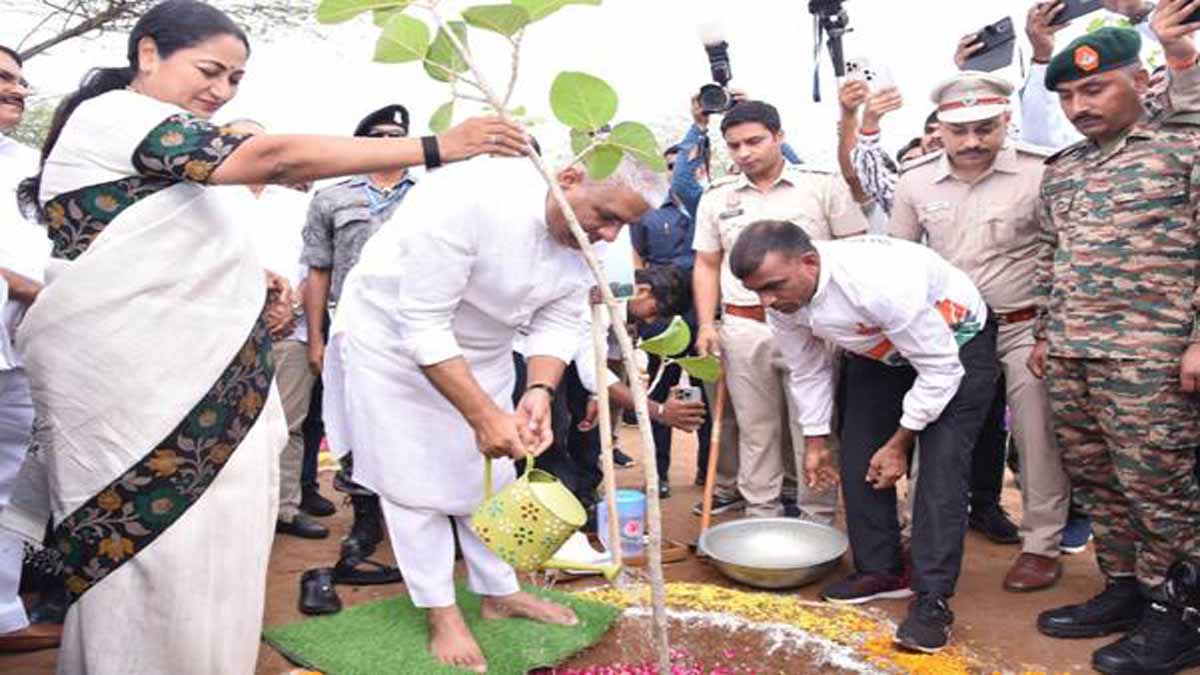
On the occasion, the dignitaries participated in a sapling plantation under the ‘Ek Ped Maa Ke Naam’ campaign as well as reviewed an exhibition on the local varieties of grasses and bushes under the ‘Dust-free Delhi’ campaign, reaffirming their commitment towards environmental conservation and sustainable development. Further, Civil society organisations that contributed to the Delhi Bird Atlas were honoured with certificates of recognition at the event, acknowledging the invaluable role of citizen participation in environmental documentation and monitoring.