

The All India Institute of Ayurveda (AIIA), New Delhi, has reported encouraging findings from a community-based Ayurveda programme conducted in Faridabad district, Haryana, to promote the physical and mental health of elderly people. According to the project findings, improvements were recorded in quality of life, Agnibala and bone mineral density following the intervention. Positive changes were also observed in cognitive health assessments, along with improvements in selected biomarkers, including serotonin, acetylcholine, DHEA and vitamin D. The findings were presented at a workshop held at AIIA on October 24, and the project report was submitted to an expert committee.
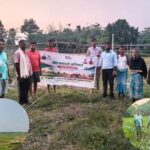
Under its Public Health Initiative (PHI), AIIA screened 5,594 people aged 60–80 years in Faridabad district over three months and provided them with Ayurvedic medicines. In addition, under a separate component focused on dementia, 200 patients were screened and provided with Ayurveda-based medicines over four months. Titled “Community-Based Ayurveda Intervention for Promotion of Physical and Mental Health in Elderly Population of Faridabad District, Haryana State,” the project aimed to study the potential of community-level Ayurveda-based interventions and assess approaches to promoting healthy ageing.
The initial assessment identified several health challenges among the elderly participants. These included vision-related problems in 67.73% of participants, physical inactivity in 43.05% and reduced cognitive function in 6.85%. Other concerns included high blood pressure, elevated random blood glucose levels, reduced bone mineral density, constipation and sleep-related problems.
In the first component of the project, improvements in quality of life were recorded following a 60-day intervention. The total score on the World Health Organization Quality of Life (WHOQOL) assessment increased from 292.0 to 326.3. Improvements were also observed across all six parameters used to assess Agnibala, an Ayurvedic concept associated with digestive and metabolic strength. An improvement in bone mineral density was also recorded.
In the second component, which focused on cognitive health, the Mini-Mental State Examination (MMSE) scores showed a shift towards normal levels. The 6-CIT assessment also indicated signs of improved cognitive performance. The quality-of-life score in this component increased from 277.4 to 364.2. Improvements were additionally recorded in the levels of serotonin, acetylcholine (ACh), dehydroepiandrosterone (DHEA) and vitamin D.
These findings provide a basis for further investigation into the potential of community-based Ayurveda interventions. However, more extensive scientific evaluation, continued safety monitoring and further studies are necessary to validate the findings and establish the effectiveness and safety of these interventions.
Dr. Koustubha Upadhyaya, Advisor to the Ministry of Ayush, attended the workshop as the Chief Guest, while Prof. (Vaidya) Pradeep Kumar Prajapati, Director of AIIA, presided over the programme. Dr. Upadhyaya emphasised the importance of meaningful social engagement with elderly people to better understand their needs. He also highlighted the importance of encouraging older adults to participate in physical and mental activities. In addition, he underscored the need for greater investment in such initiatives to achieve better health outcomes.
Prof. (Vaidya) Prajapati appreciated the efforts of the Public Health Initiative team and stressed the importance of systematically studying experiences with community-based Ayurveda healthcare services and widely disseminating the findings. He also emphasised the need to extend such initiatives to a larger number of elderly people. The Director further emphasised the importance of the joint family system, highlighting its role in ensuring proper care, support, and emotional well-being of the elderly.
The workshop also featured contributions from Dr. Suneela Garg, Director Professor and Head of the Department of Community Medicine at Maulana Azad Medical College, New Delhi; Dr. Suman Ray, Senior Principal Scientist at the CSIR–National Institute of Science Communication and Policy Research (NIScPR); and Dr. Lokesh Singh Shekhawat, Professor of Psychiatry at Dr. Ram Manohar Lohia Hospital.
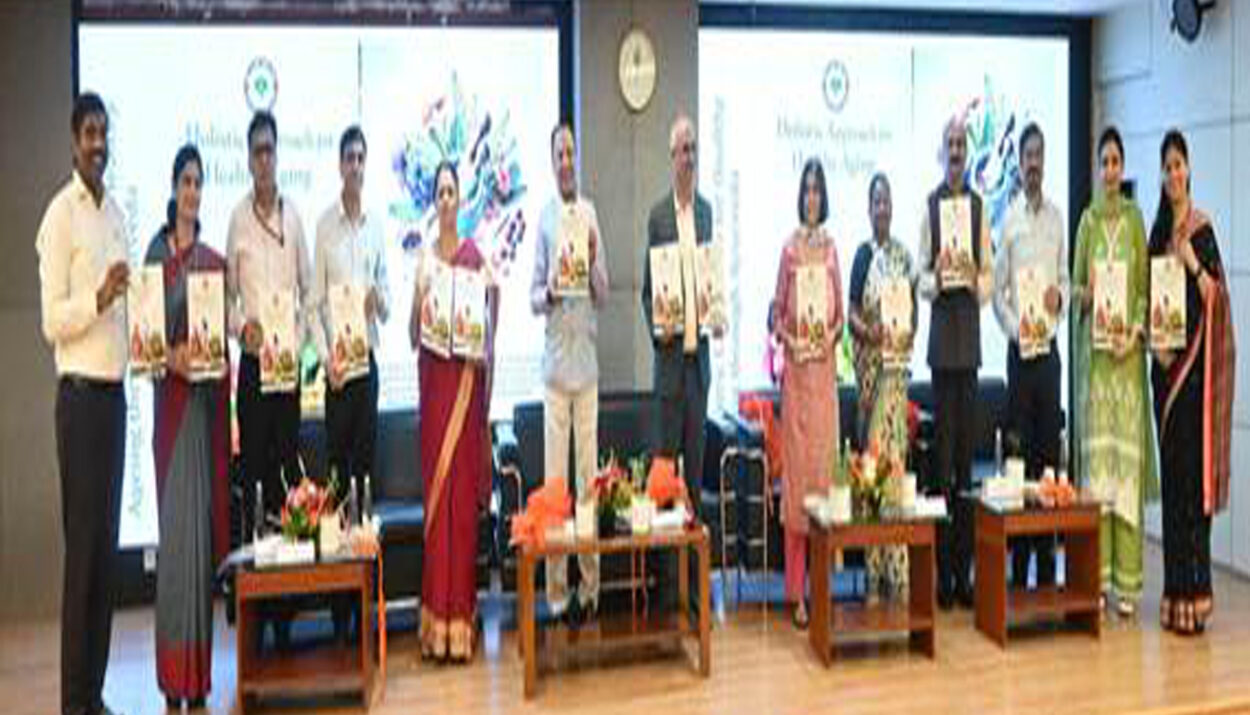
The occasion also witnessed the release of the book Holistic Approach for Healthy Aging. Other attendees included Prof. (Dr.) Manjusha Rajagopala, Dean (DU); Prof. (Dr.) Mahesh Vyas, Dean (Ph.D.); Prof. (Dr.) R. K. Yadav, Dean (PG); and Prof. (Dr.) Yogesh Badwe, Medical Superintendent, along with other faculty members of the institute.
The All India Institute of Ayurveda (AIIA), New Delhi, is an autonomous institution under the Ministry of Ayush, Government of India. The institute works to advance Ayurveda through education, research, clinical services and public health initiatives.