
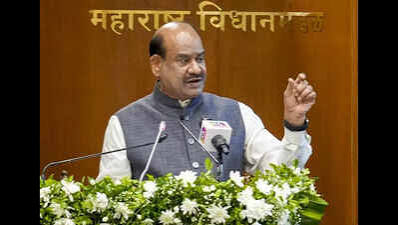

Lok Sabha Speaker Shri Om Birla today called upon the Public Accounts Committees (PACs) of Parliament and State Legislatures to strengthen their role as guardians of public money, emphasising that every rupee drawn from the public exchequer must be properly accounted for and utilised fully for the purpose for which it was sanctioned. He said that transparency and accountability are the cornerstones of democracy and that the ultimate measure of public expenditure must be the positive difference it makes to the lives of ordinary citizens.
Inaugurating the Conference of Chairpersons of Public Accounts Committees of Parliament and State Legislatures in Thiruvananthapuram, Shri Birla said that the PAC is a vital institution of parliamentary democracy, entrusted with the responsibility of examining public expenditure, ensuring financial discipline and holding the Executive accountable. He observed that the responsibility of the Committees extends beyond scrutiny of accounts and audit findings; they must also assess whether public funds have achieved their intended objectives and delivered the outcomes for which they were allocated.
Expressing concern over audit observations remaining unresolved for 10, 15 or even 20 years, Shri Birla said that such prolonged pendency raises serious questions about the effectiveness of the system. He called for a concrete, systematic and time-bound action plan to ensure that audit observations and the action arising from them are addressed without undue delay. The Union and State Governments, he said, must work together to strengthen the mechanisms of monitoring, review and follow-up so that accountability is not merely established on paper but translated into timely corrective action. Highlighting the distinctive democratic convention of appointing a Member of the Opposition as the Chairperson of the Public Accounts Committee, Shri Birla said that this practice reflects the maturity, inclusiveness and strength of India’s parliamentary democracy. The representation of all political parties in the Committee ensures that different perspectives are brought to the examination of public expenditure. He described this arrangement as a shining example of the ability of democratic institutions to rise above political considerations in pursuit of a common national objective.
Lok Sabha Speaker noted that Members may belong to different political parties, hold different ideologies and have differing views on policies and governance; however, when it comes to safeguarding public money, their responsibility is shared. The PAC must function through dialogue, cooperation, consensus and collective responsibility. Its purpose is not to criticise any individual or government, but to ensure that public funds are neither misused nor wasted, that irregularities and leakages are prevented, and that the Executive remains accountable to the people. He emphasised that the trust of citizens is the foundation of democratic governance. Every rupee of public money represents the aspirations and contribution of the people and must therefore be spent with the highest standards of financial propriety.
Lok Sabha Speaker stressed that the assessment of public expenditure must not remain confined to figures, allocations and utilisation certificates. In the case of infrastructure projects, Committees should, wherever appropriate, visit project sites and examine the quality of work, its timely completion and adherence to prescribed standards. He said that such direct assessment would help establish whether the money spent has resulted in the intended infrastructure and whether public resources have been used effectively. Similarly, in the case of social welfare schemes, it is essential to go beyond the amount spent and examine the actual impact of the expenditure. The ultimate objective of public expenditure, he said, must be social good and public welfare.
Referring to the important role of the Comptroller and Auditor General of India, Shri Birla said that the examination of CAG audit findings, scrutiny of Action Taken Reports and follow-up on recommendations are integral to the functioning of the PAC. However, the larger purpose of this exercise is to ensure that public money is used transparently, efficiently and strictly in accordance with its sanctioned purpose. Where systemic improvements are required, the Committees should provide appropriate guidance and recommend corrective measures. He called upon the PACs of Parliament and State Legislatures to use the conference as an effective platform for sharing experiences, ideas, innovations and best practices. He said that the practices adopted by States that have demonstrated greater transparency, stronger financial oversight and more effective evaluation should be shared so that others can learn from them. He underlined that healthy competition among States in strengthening accountability mechanisms would contribute to better governance across the country.
Stressing the need for a future-oriented approach, the Speaker said that changing circumstances require the Committees to continuously strengthen their methods of scrutiny and oversight. Technology, data analytics and Artificial Intelligence can play an important role in analysing large volumes of expenditure data, identifying emerging trends, detecting potential financial irregularities and improving the monitoring of audit observations. He also stressed the importance of citizen participation in governance and said that greater transparency in the use of public resources strengthens public confidence in democratic institutions. A system in which public expenditure is closely monitored, accounts are thoroughly scrutinised and corrective action is taken in a timely manner is essential for ensuring that government resources serve the people effectively. He observed that the scope and responsibilities of the PAC have evolved over the years. Apart from examining audit reports and public accounts, the Committee has made significant contributions through its recommendations on public expenditure, the functioning of government departments, administrative reforms and programme evaluation.
Recalling the recent centenary celebrations of the PAC, he said that the foundational principles of the Committee must continue to guide its future priorities and that the commitments made on that occasion should be translated into concrete improvements in its functioning. The Speaker further emphasised that schemes implemented through Centre-State partnerships and public-private partnerships require effective financial scrutiny within the respective mandates of the Committees.
Shri Birla expressed confidence that the deliberations would lead to constructive recommendations and concrete outcomes to strengthen financial discipline, transparency and accountability. He said that the resolutions emerging from the conference should guide improvements in monitoring, audit follow-up and the quality of public expenditure, with the shared objective of ensuring that every rupee of public money is utilised responsibly and for its intended purpose.
The Inaugural Session was graced and addressed by the Chief Minister of Keralam Shri V. D. Satheesan,; Deputy Chairman, Rajya Sabha, Shri Harivansh; Chairman, Public Accounts Committee, Lok Sabha, Shri K. C. Venugopal; Speaker, Keralam Legislative Assembly, Shri Thiruvanchoor Radhakrishnan, and Chairperson, PAC of Keralam Legislative Assembly, Shri K. N. Balagopal. The Session was attended by Chairpersons and Members of Public Accounts Committees of State Legislatures, and other distinguished dignitaries.
On this occasion, Public Accounts Committee Conference Souvenir 2026 was also released.
FINANCIAL SCRUTINY MUST BE OUTCOME-DRIVEN TO ENSURE ACCOUNTABILITY, SAYS CHAIRPERSON OF PUBLIC ACCOUNTS COMMITTEE OF PARLIAMENT OF INDIA; CALLS FOR TIMELY AUDITS AND BALANCED COVERAGE OF PUBLIC WELFARE PROGRAMMES
Delivering Welcome Address, Chairman of the Public Accounts Committee (PAC) of Parliament of India, Shri K.C. Venugopal, underscored the need to strengthen legislative financial scrutiny to ensure that public expenditure translates into tangible outcomes, improved service delivery and meaningful benefits for citizens. Emphasising that accountability must go beyond the mere examination of expenditure, he called for a more outcome-oriented approach to parliamentary oversight, ensuring that every public rupee is spent judiciously and delivers its intended purpose. He also proposed that at least one PAC Report, along with the Government’s Action Taken thereon, be discussed during every Session of Parliament. He also underscored the importance of timely audits, balanced coverage of various sectors and closer scrutiny of flagship welfare programmes and major infrastructure projects to ensure that public resources serve the larger public interest.