


After independence, Indian companies operated within structured legal frameworks supporting normal business activities. When financial stress emerged, they relied on multiple legal mechanisms for resolution. These included company law, debt recovery processes and secured creditor frameworks. Each mechanism followed separate forums and procedures. This often made coordination complex and time-consuming.
To address these challenges, the Government introduced the Insolvency & Bankruptcy Code, 2016. It consolidated existing laws into a single system. The Code also strengthened creditor participation and aimed to maximise asset value, while balancing the interests of all stakeholders.
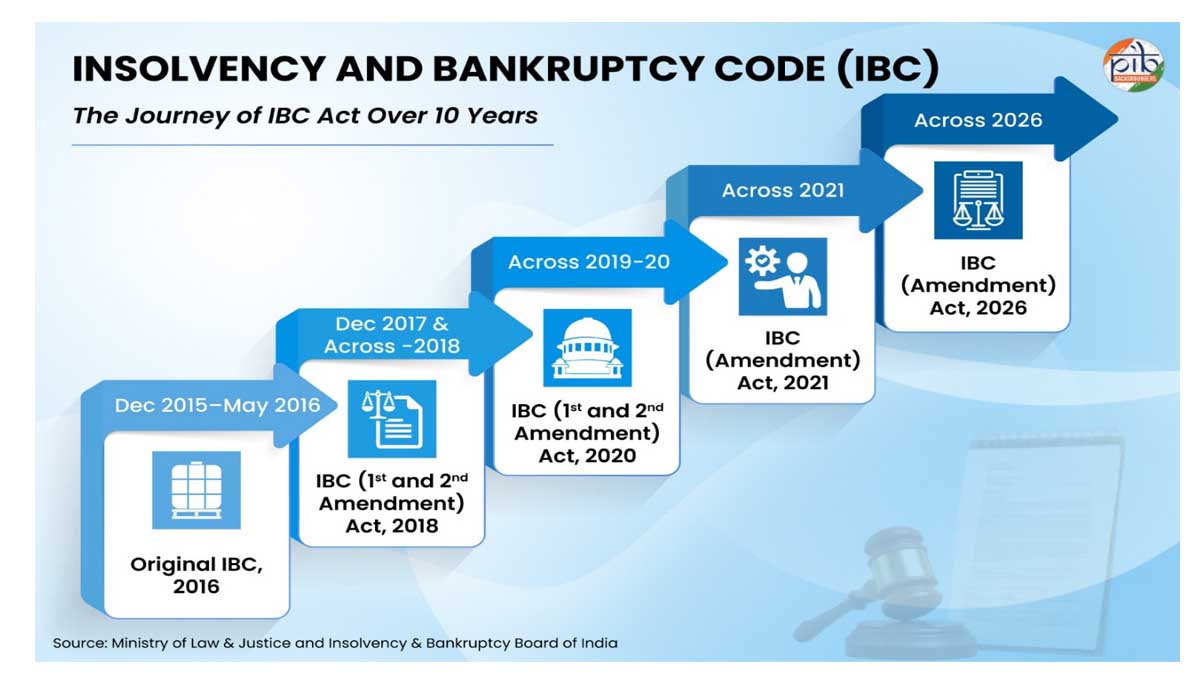
As the system evolved, implementation experience highlighted areas for improvement. Refinements were introduced to enhance efficiency and outcomes. This continuous reform process led to the enactment of the Insolvency & Bankruptcy Code (Amendment) Act, 2026, marking the next phase of consolidation.
The Pre-IBC Framework and the Need for Reform
Before the enactment of the Insolvency & Bankruptcy Code, 2016, insolvency resolution in India operated through multiple overlapping legal frameworks. Companies facing financial distress were dealt with under different laws such as the Companies Act, the Sick Industrial Companies Act (SICA), debt recovery mechanisms and secured creditor frameworks including SARFAESI. These processes functioned through separate institutions and forums, often resulting in fragmented proceedings and overlapping jurisdiction.
As a result, resolution processes frequently became prolonged and uncertain. Cases remained pending for years while the value of distressed assets continued to deteriorate. Delays weakened the ability of creditors to recover dues and reduced the possibility of reviving viable businesses. The absence of a consolidated and time-bound mechanism also affected overall credit discipline and investor confidence.
Recognising these structural challenges, the Government introduced the Insolvency & Bankruptcy Code, 2016 as a comprehensive reform.
A Unified and Time-Bound Insolvency Framework
The Insolvency & Bankruptcy Code, 2016 established a unified framework for resolving insolvency across companies, partnership firms and individuals. It consolidated multiple insolvency laws into a single structure, creating a more coordinated and predictable resolution process.
A key objective introduced by the Code was the transition from a debtor-controlled system towards a creditor-driven resolution framework. The emphasis moved beyond mere recovery proceedings towards value maximisation, continuation of viable businesses and balanced treatment of stakeholders. The Code sought to ensure that financial distress is addressed at an early stage before prolonged delays erode enterprise value.
At the centre of the framework is the Corporate Insolvency Resolution Process (CIRP), which provides a structured mechanism for resolving corporate insolvency. The Committee of Creditors (CoC), comprising financial creditors, evaluates resolution plans. They then make important commercial decisions regarding the future of the stressed entity.
The Code also introduced a time-bound structure for resolution. The CIRP was designed to be completed within 180 days, extendable up to 330 days in specified circumstances. This timeline-based approach aimed to prevent indefinite delays and preserve the economic value of distressed businesses. If resolution is not achieved within the prescribed framework, the entity moves into liquidation in accordance with the provisions of the Code.
Institutional Structure under the IBC
The effectiveness of the IBC framework rests on a regulated institutional ecosystem established under the Code. The Insolvency and Bankruptcy Board of India (IBBI) functions as the regulatory authority responsible for overseeing insolvency processes, Insolvency Professionals (IPs) and related institutions under the framework. It also frames regulations and standards governing the functioning of the insolvency ecosystem.