

Antyodaya as a Governance Framework
“Recall the face of the poorest and the weakest man whom you may have seen,” Mahatma Gandhi once advised, “and ask yourself if the step you contemplate is going to be of any use to him.” For decades, this powerful idea was mostly found in books, while millions of Indians were left out of the country’s progress.
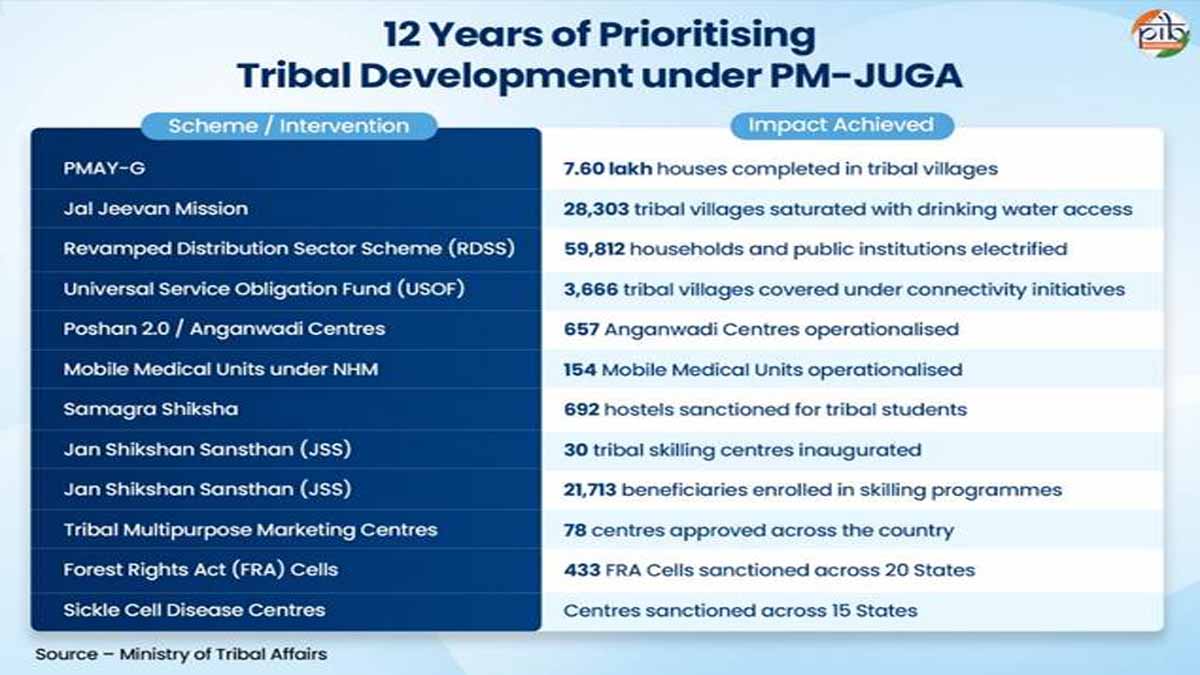
However, the past twelve years have seen a major change. India has moved from just talking about this ideal to putting it into action. This has ensured that those who were last in line become first in access to opportunity, dignity, and development. The focus has moved from fragmented delivery to saturation-based inclusion.
Tribal habitations saw greater infrastructure expansion. Students from deprived communities gained wider educational access. Sanitation workers received stronger institutional recognition and safety support. Backward and nomadic communities entered the focus of targeted welfare planning.
The change has also been visible geographically. Tribal regions, aspirational districts, and remote habitations became central to development planning and monitoring. Convergence across ministries strengthened last-mile delivery in areas once considered difficult to reach.
Tribal Communities at the Centre of Development
India’s tribal communities have always been rich in culture, traditional knowledge, and resilience. What they lacked was equal access to infrastructure and services, like transport, education, healthcare, water, power and employment opportunity. The past 12 years have been about closing that distance — consciously, measurably, and at scale.
The shift has especially been visible in remote habitations including in areas inhabited by Particularly Vulnerable Tribal Groups (PVTG). Areas once seen as difficult to reach have become central to development planning and last-mile delivery.