

India has undertaken sustained reforms over the past years to improve its business regulatory environment. The government’s focus has gradually shifted from a compliance-heavy system to a facilitation-driven ecosystem. Reforms have aimed at enhancing speed, transparency, and trust-based governance across processes. Consequently, this has resulted in growing investor confidence in India’s business environment and improved Ease of Doing Business (EoDB).
The progress is reflected in global assessments such as the Doing Business Report 2020 by World Bank. India’s rank improved from 142 in 2014 to 63 in 2019, marking an advancement of 79 positions over five years.
Additionally, the IMD World Competitiveness Ranking 2025 factors in economic performance of the country, Government and business efficiency and infrastructure development for the businesses. India’s rank improved from 43 in 2021 to 41 in 2025. This highlights stronger business environment, improved governance and better digital and regulatory reforms.
The World Bank’s GovTech Maturity Index, which assesses public sector digital transformation, placed India in Group A in 2020, 2022 and 2025. This category represents countries demonstrating advanced and innovative practices across Core Government Systems, Public Service Delivery, Digital Citizen Engagement, and GovTech Enablers.
United Nations also conducts E-Government Survey to assess the digital government landscape across different countries. India has secured overall high score in the survey. Within this, India has also achieved a very high score in the Online Services Index. India has also acquired high scores in Telecommunication Infrastructure and Human Capital indices. This indicates strong digital public service delivery, expanding digital infrastructure, and improved citizen access to technology-enabled governance services.
These improvements are driven by continued efforts to simplify regulations and streamline procedures. The Government has also reduced compliance burden across the business lifecycle. Reforms span from registration and logistics support to insolvency resolution. This is transforming business practices, making it easier for entrepreneurs in India and globally.
Advancing Business Entry Reforms
Over the last 12 years, the Government has introduced major reforms to simplify business entry and formalisation processes in India. These measures have reduced procedural barriers and enabled faster, technology-driven, and paperless systems for entrepreneurs and MSMEs.
Startup India
Launched in January 2016, the Startup India initiative aims to support entrepreneurs and build a robust startup ecosystem. It seeks to transform India into a nation of job creators rather than job seekers. Support measures include the Seed Fund, Fund of Funds, investor connect portal, and a credit guarantee scheme.
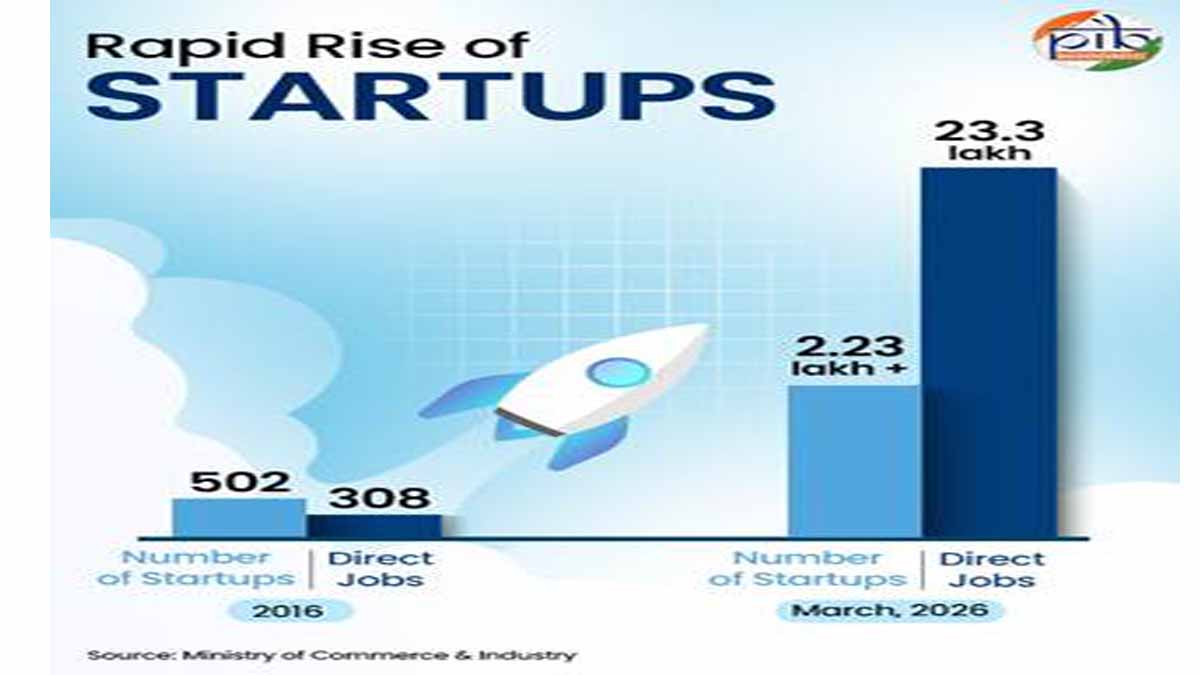
In 2016, only 502 startups were recognised, creating 308 direct jobs. However, by March 2026, over 2.23 lakh startups have been recognised, generating 23.3 lakh direct jobs. This rapid growth has expanded employment and entrepreneurial opportunities. Additionally, ~48% of these startups have at least one-woman director or partner, reflecting growing inclusivity.