

Land Restoration is India’s established National Priority, integral to Sustainable Land Management, Biodiversity Conservation, Climate Action and Rural Development: Union Environment Minister
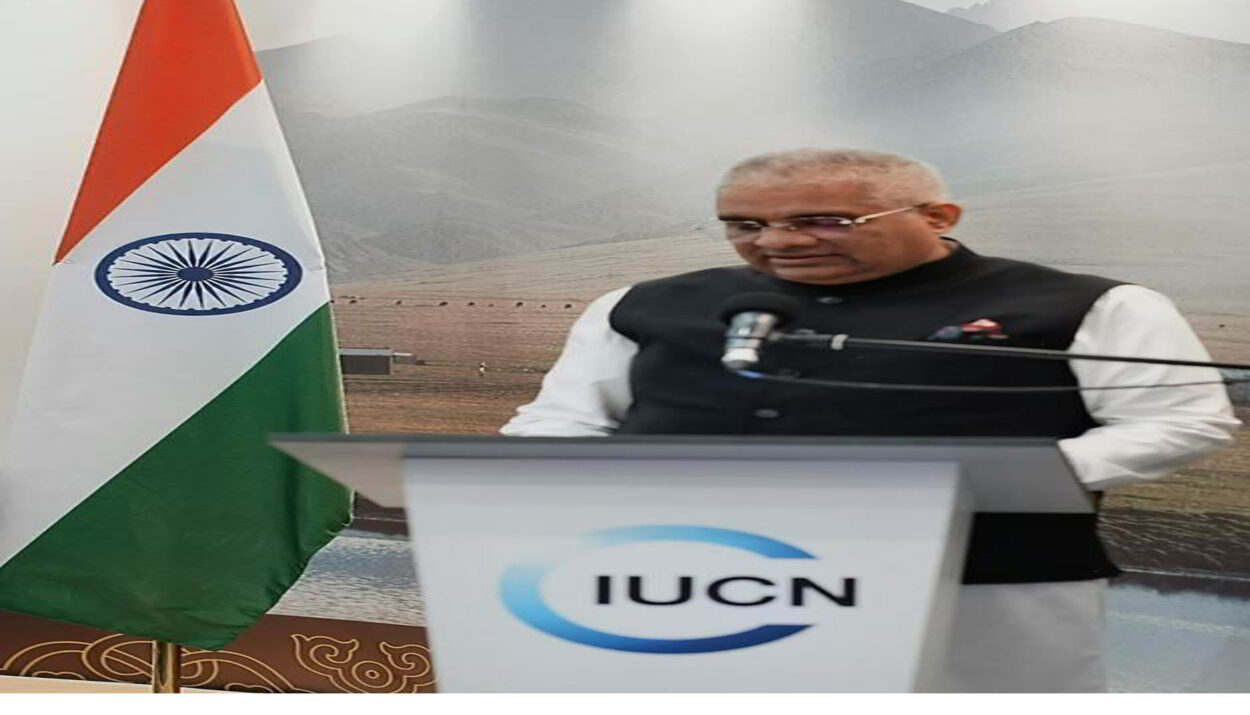
Union Minister for Environment, Forest and Climate Change Shri Bhupender Yadav today said that land restoration is an established national priority for India and is integral to the country’s efforts on sustainable land management, biodiversity conservation, climate action and rural development. Speaking at a side event organised by the IUCN at the 17th Conference of the Parties (CoP 17) to the United Nations Convention to Combat Desertification (UNCCD) in Ulaanbaatar, Mongolia, Shri Yadav said India views restoration not as a standalone intervention, but as an essential component of sustainable and resilient development.
The Minister said India is among the major global pledgers to the Bonn Challenge. In 2015, India made an initial commitment to restore degraded and deforested land, which was subsequently enhanced to 26 million hectares by 2030. He said this commitment reflects both the scale of the challenge and India’s confidence in its national capacity to deliver restoration at scale.
Shri Yadav said India has recently released its Second Progress Report on the Bonn Challenge, covering the period 2011–2020. During this period, 21.76 million hectares were brought under restoration, supported by significant convergent financial flows and generating approximately 1.22 billion person-days of employment, he said. The Minister said these figures demonstrate that restoration can deliver both environmental and socio-economic outcomes by reviving degraded landscapes while creating employment and supporting rural livelihoods. Importantly, he said, the assessment goes beyond measuring hectares. It captures restoration across forests, agriculture, soil and water conservation and other land-use systems, recognising that restoration must respond to the ecological and socio-economic characteristics of each landscape.
The reporting process has also highlighted the need to further strengthen systems for monitoring restoration outcomes, financial flows and livelihood impacts, Shri Yadav said. India is therefore undertaking the next reporting cycle for 2021–2025, in collaboration with the ICFRE Centre of Excellence on Sustainable Land Management and IUCN. This cycle will focus on three key dimensions – area restored, financial flows and employment generated – while strengthening the national evidence base for restoration. The Minister said the credibility of any commitment ultimately rests on implementation. India has therefore developed a multi-sectoral and landscape-based approach to translating this ambition into action.
The Green India Mission, Shri Yadav informed, is strengthening forest and tree cover, ecosystem services and climate resilience. Through the Compensatory Afforestation Fund Management and Planning Authority, substantial resources are being directed towards compensatory afforestation and allied restoration activities. The Nagar Van Yojana for urban greening extends the restoration agenda to urban and peri-urban landscapes through urban forestry and green spaces. These efforts are complemented by watershed development, agroforestry, soil and water conservation and community-based restoration across the country, the Minister said.
Shri Yadav stated that this experience demonstrates that restoration cannot be delivered through a single programme or sector. It requires convergence across landscapes, sectors and levels of governance – from local communities and States to the Union Government. Looking beyond 2030, the Minister said India’s objective must be not only to restore more land, but to restore better, finance better and deliver measurable and lasting outcomes.The Minister said this will require innovative financing mechanisms to mobilise greater public and private investment; stronger regional and international partnerships to share knowledge, technologies and experience; and sustained participation of local communities. Restoration is ultimately sustained by the people who depend upon and manage these landscapes, the Minister added.
Shri Yadav concluded by stating that India remains committed to working with international partners to advance restoration at scale. India’s experience demonstrates that ambitious commitments can be translated into measurable outcomes when supported by strong institutions, sustained financing, sound science, robust monitoring and partnerships across sectors and levels of governance. He said India looks forward to working with all partners in advancing this shared agenda.