
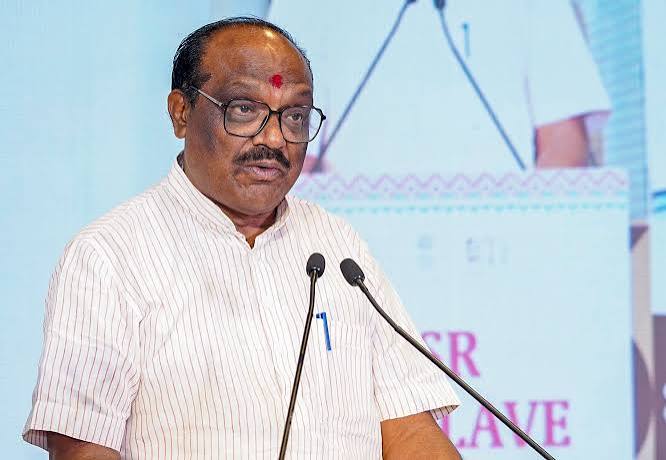

The Ministry of Tribal Affairs will organise a three-day National Conclave on Tribal Languages & Museums from 24–26 August 2026 in Mysuru, Karnataka. The Conclave brings together, for the first time on a single platform, a national dialogue on the documentation, preservation and revitalization of tribal languages, together with a parallel track on strengthening Tribal Museums and Tribal Freedom Fighter Museums (TFFMs) across the country. The National Conclave advances the Prime Minister’s roadmap for a Viksit Bharat @2047, under which reviving India’s traditional knowledge systems and ensuring no community is left behind remain key pillars of inclusive national development.
India’s tribal communities are custodians of several hundred languages and dialects, a large number of which remain unwritten, are absent from the classroom, and are no longer being passed down to the next generation. Recognising that the loss of a tribal language takes with it an entire body of ecological, medicinal, agricultural and cultural knowledge, the Ministry — through the network of Tribal Research Institutes (TRIs) and State Tribal Welfare Departments — has convened the National Conclave to place community priorities at the centre of the agenda and arrive at a national roadmap for tribal language documentation, preservation and revitalization.
The Conclave will also carry forward the vision announced by the Hon’ble Prime Minister in his 2016 Independence Day address, recognising the contribution of tribal communities to India’s freedom struggle. Pursuant to this, the Ministry has sanctioned 11 Tribal Freedom Fighter Museums across 10 States, of which four have been inaugurated, and the Conclave will deliberate a common vision for Tribal Museums and TFFMs as vibrant institutions of contemporary curation, storytelling and community-rooted heritage representation. This reflects the Prime Minister’s broader conviction that language is not merely a medium of communication but a living repository of a community’s culture, heritage and traditional knowledge — a vision in which tribal languages occupy a central place.
The conclave will be inaugurated by Shri Durgadas Uikey, Hon’ble Union Minister of State, Ministry of Tribal Affairs in the presence of Sri Raghumurthy, Hon’ble Minister, Tribal Welfare Department, Karnataka; Shri Anant Prakash Pandey, Joint Secretary, Ministry of Tribal Affairs; Smt. Kanagavalli, IAS, Secretary, Tribal Welfare Department, Karnataka; Prof. Basavaraja Kodagunti, Director, Central Institute of Indian Languages (CIIL). The inaugural session will see the release of Karnataka Primers in tribal languages, the signing of an MoU between the Ministry of Tribal Affairs and CIIL, the launch of Chatbot, and a major update to the Adi Vaani platform — including its new iOS application, and the addition of five new languages and multiple new features on the platform.
The day’s proceedings will include panel discussions on the current status of tribal-language documentation and community-led revitalization models; on language technology — including ASR, text-to-speech, machine translation, corpus building and associated data-protection and commercialization concerns; and on multilingual education (MLE). TRIs from across the country will present their language-preservation initiatives.
Day Two will open with a panel on what tribal communities themselves want from language revitalization efforts, featuring grassroots and community-linguist speakers, followed by the drafting, adoption and signing of a possible Declaration on Tribal Languages. The day then transitions into the Museums track, with sessions on representing tribal freedom narratives with authenticity; museums as living institutions of memory and identity; the museum planning process from building to exhibition; contemporary display techniques and digital technologies including AR/VR and interactive kiosks; and community participation in museum-making, drawing on experiences such as the Tribal Museum, Bhopal.
The Conclave will bring together senior officials from the Ministry of Tribal Affairs and State Tribal Welfare Departments, TRIs and implementing agencies, tribal linguistic experts, museum professionals, curators, conservation and technology experts, historians, anthropologists, tribal community representatives, and traditional knowledge holders from across the country.
Expected outcomes of the Conclave include a consolidated national picture of tribal-language documentation; a shortlist of community-led revitalization models identified for scaling; a working approach to multilingual education in tribal Schools; the adoption of the Declaration on Tribal Languages; and a shared national vision for Tribal Museums and TFFMs strengthening research, curation, conservation and community participation.